

Cyberpunk Fashion & Style
Table of Contents
Section titled “Table of Contents”- Table of Contents
- 1. Research Question & Scope
- 2. Methodology
- 3. NLM Artefacts
- 4. Image Gallery
- 5. Key Findings
- 6. Source Inventory
- 7. Conflicts & Open Questions
- 8. Blindspot / Gap Analysis
- 9. Recommended Next Steps
1. Research Question & Scope
Section titled “1. Research Question & Scope”Research question: What is cyberpunk-related fashion and style — covering real-world fashion expressions including runway, street style, subcultures, techwear, wearable technology, and key designers?
Scope constraints: - Focus on real-world fashion (not fiction/games/cosplay, except as minor context) - No strict time range — historical origins through 2025–2026 current state - Geographic scope: global, with emphasis on Japan/Tokyo, West (US/Europe), South Korea - Cosplay included only as a minor perspective - Image and video resources to be identified throughout
Out of scope: - Cyberpunk fiction, games, and film as primary subjects (referenced only as cultural catalysts for fashion) - Cosplay as a primary focus2. Methodology
Section titled “2. Methodology”- Resource types consulted: Web pages, academic papers (PDFs), Reddit communities, fashion magazines, brand wikis, Instagram accounts, YouTube channels
- Search strategy: NotebookLM research agent (
source add-research --mode deep) on the research question; notebook contains 72+ sources discovered automatically. Supplemented with manualsource addfor 4 secondary leads. - Depth: Primary sources fully indexed in NLM; 5 sources read directly via WebFetch;
synthesis conducted via 9 RAG queries (
notebooklm ask); secondary sources added and re-queried. - Secondary sources approved by user: Auto-included per session instructions. Added: chloma.com, bonnegueule.fr, tokyofashion.com/tag/cyber-fashion/ (3 added; acrnm.com and graduatestore.fr failed to load).
- Tools used: NotebookLM CLI (
notebooklm-py), WebFetch for direct source reads, NLM notebook9c1b2a69-4407-4230-8be7-622e5481ac05. - NLM notebook: https://notebooklm.google.com/notebook/9c1b2a69-4407-4230-8be7-622e5481ac05
3. NLM Artefacts
Section titled “3. NLM Artefacts”| Artefact | Description |
|---|---|
| Briefing doc | NLM-generated briefing doc — “The Future of Wearable Technology: Fashion, Performance, and Functional Intelligence”; source [S-NLM] |
| Mind Map | ”Wearable Technology & Futuristic Fashion” — concept overview |
| Briefing doc v1 | Earlier NLM report: “Wearable Technologies: The Synthesis of Fashion, Performance, and Science” |
4. Image Gallery
Section titled “4. Image Gallery”Images sourced from URLs referenced in this report. Click any image to visit the source page.
4.1 Cyberpunk Runway History
Section titled “4.1 Cyberpunk Runway History”Source: A Brief History of Cyberpunk on the Fashion Runway — SHELLZINE
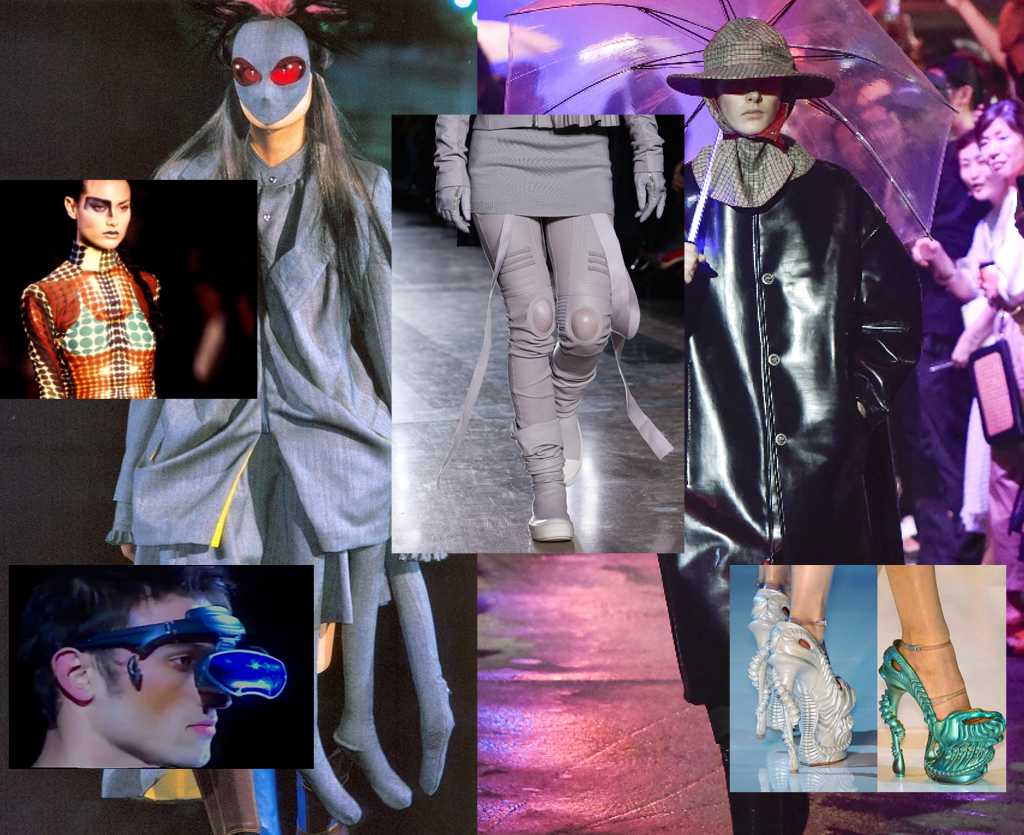
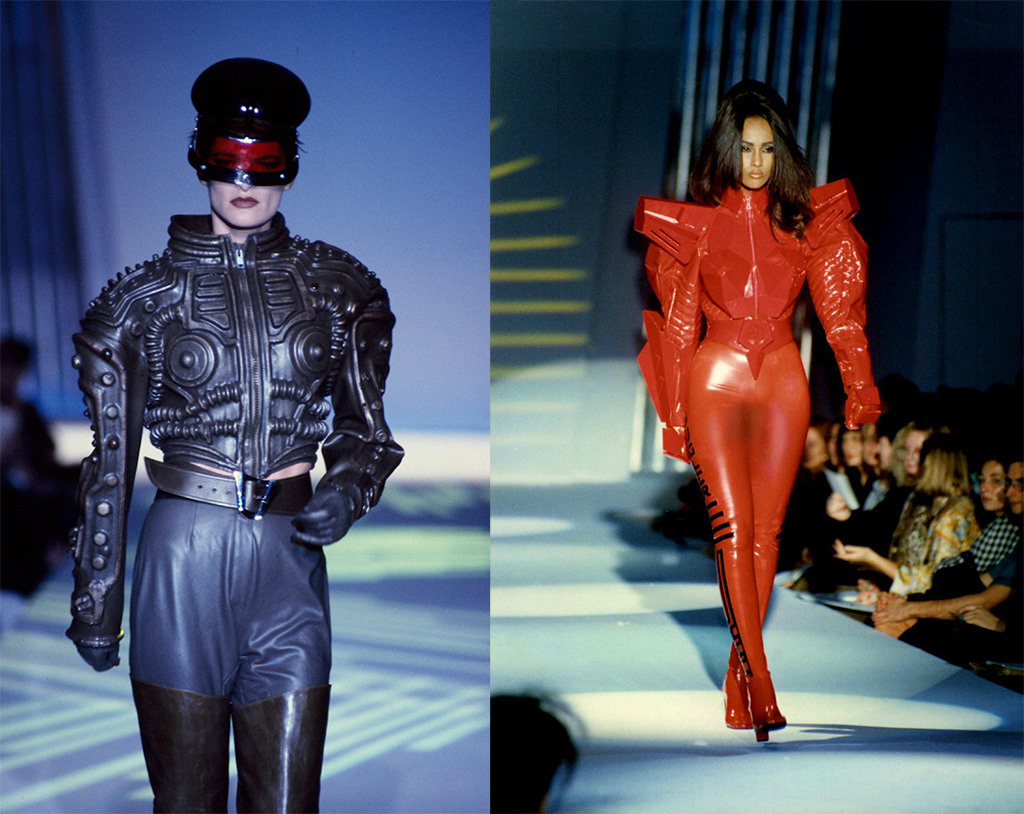 Thierry Mugler A/W 1990 & S/S 1991
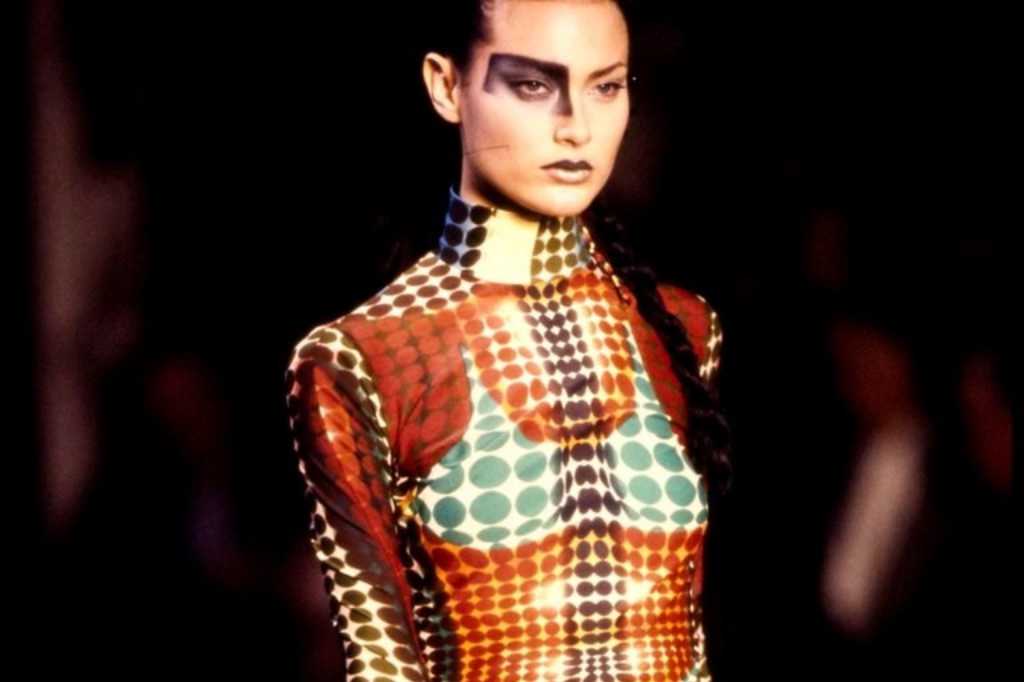 Jean Paul Gaultier A/W 1995 “CYBER”
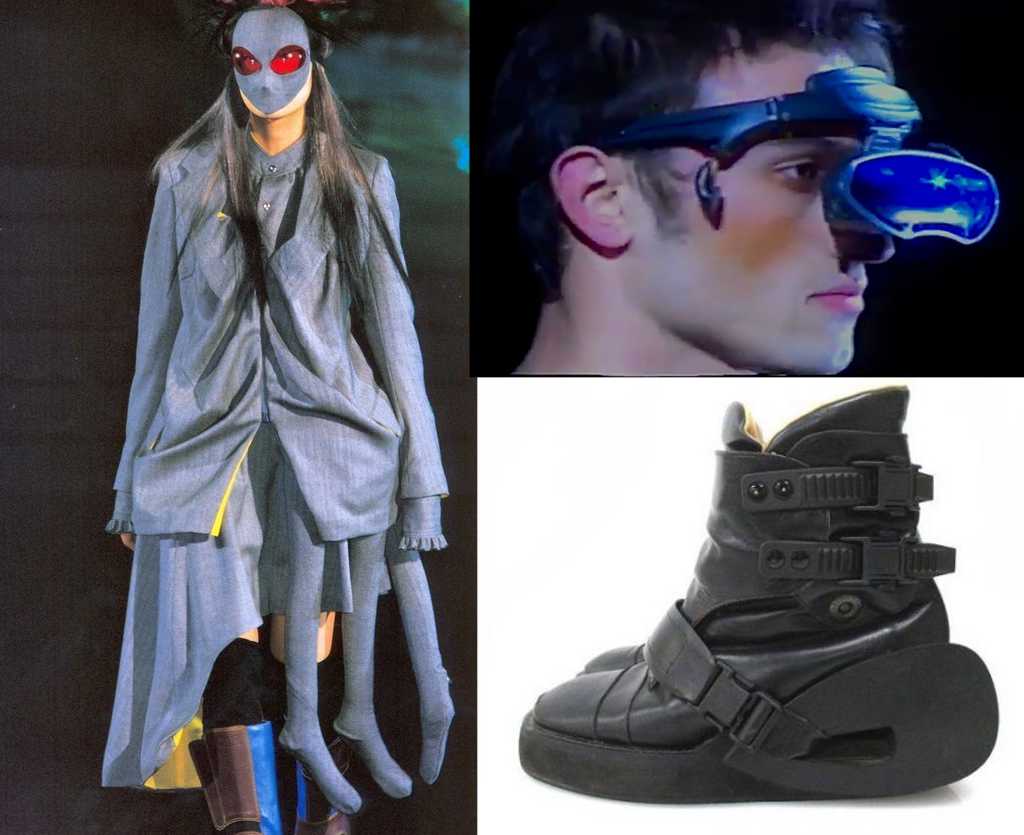 20471120 S/S 1998 “Yikes”
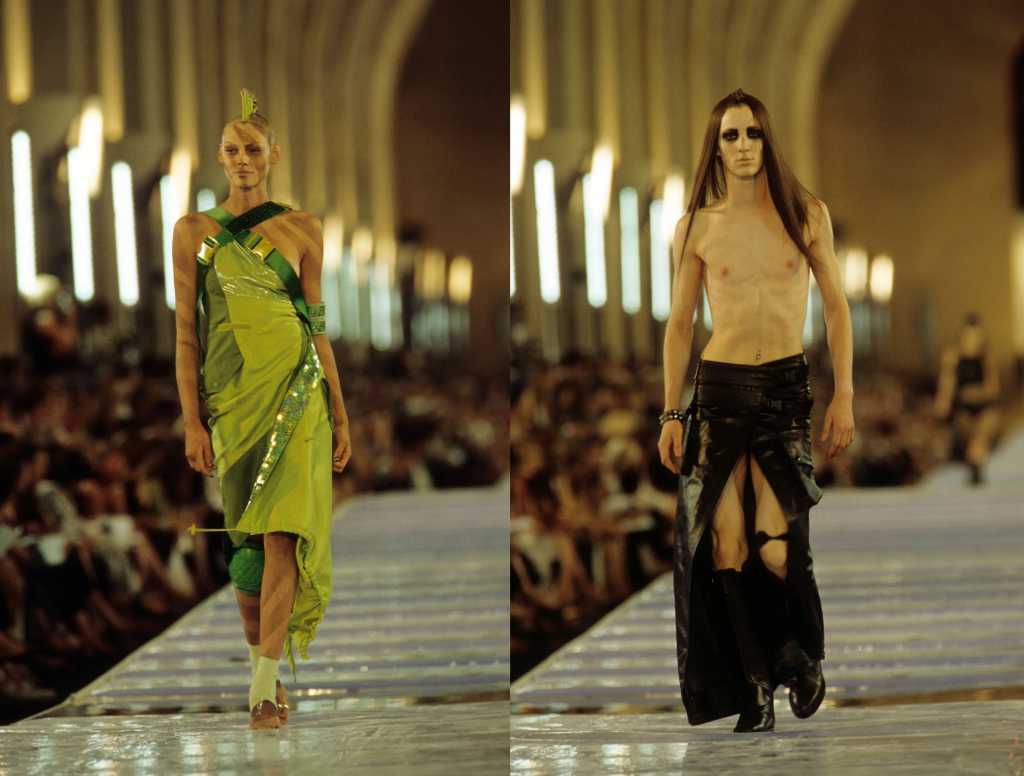 Dior A/W 1999
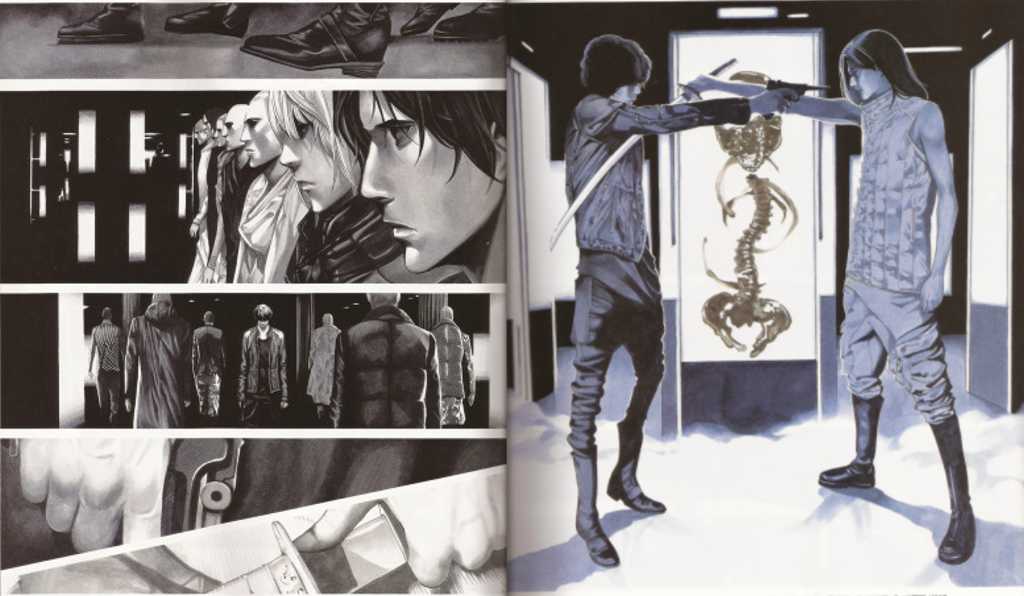 Julius_7 2012 manga lookbook
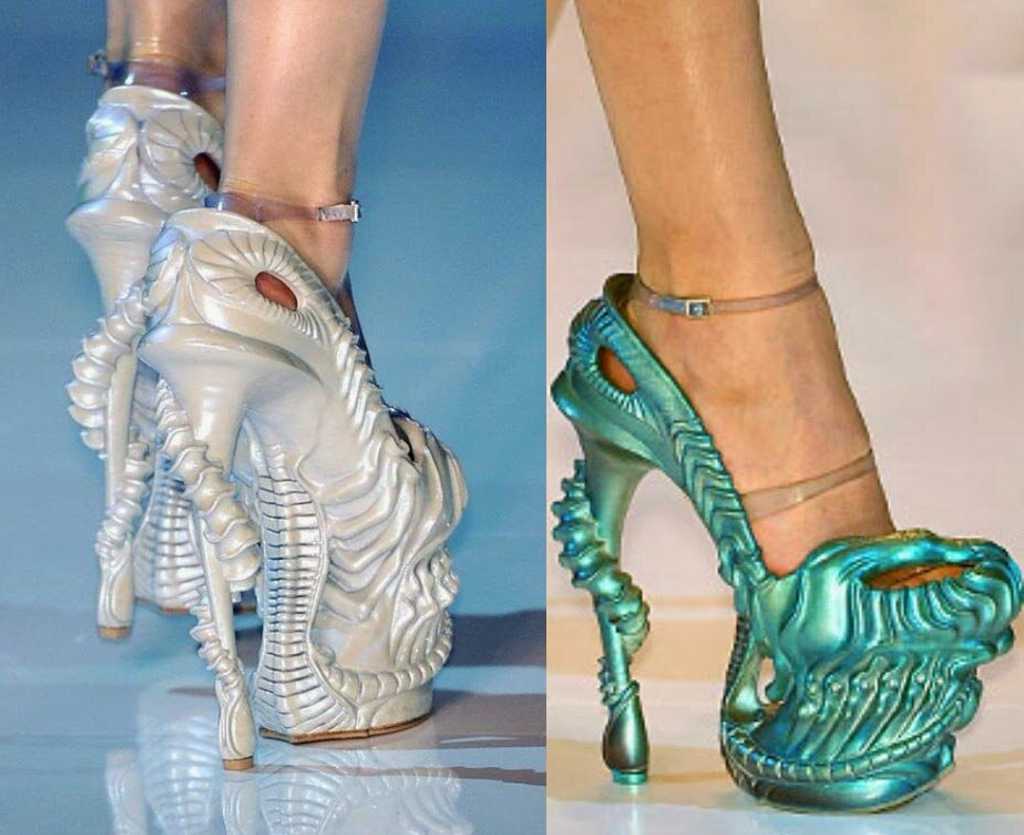 Alexander McQueen S/S 2011
 Gareth Pugh A/W 2011
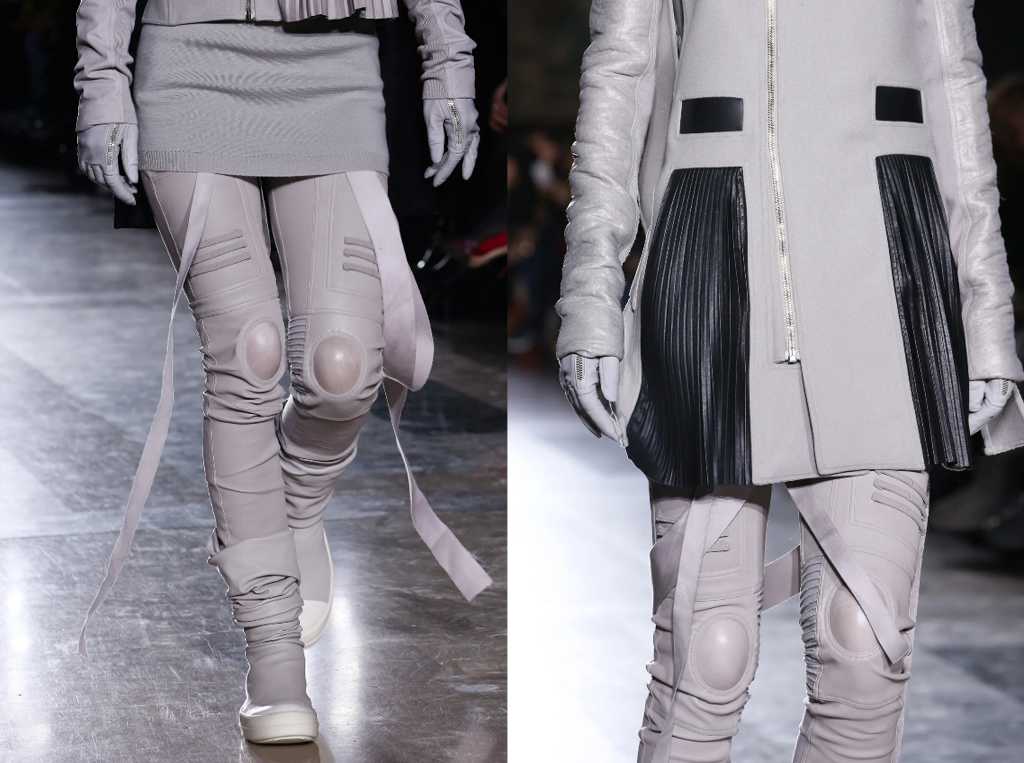 Rick Owens A/W 2014 “Moody”
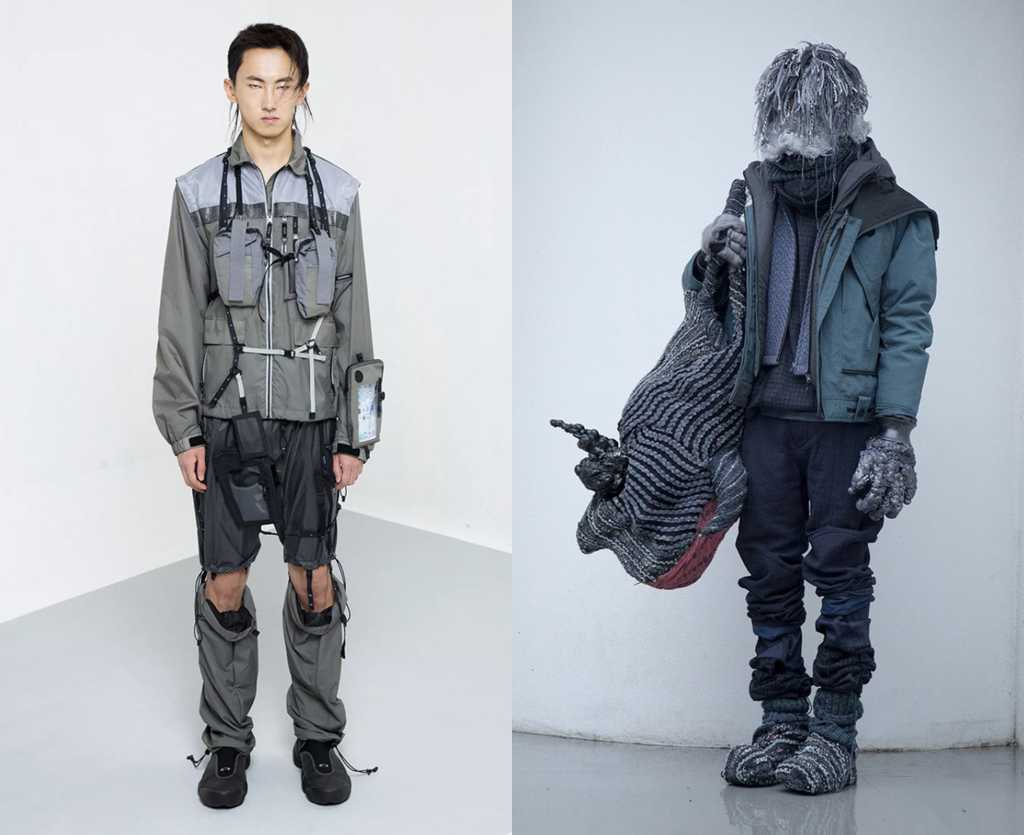 BLACKMERLE 2016–2019 lookbooks
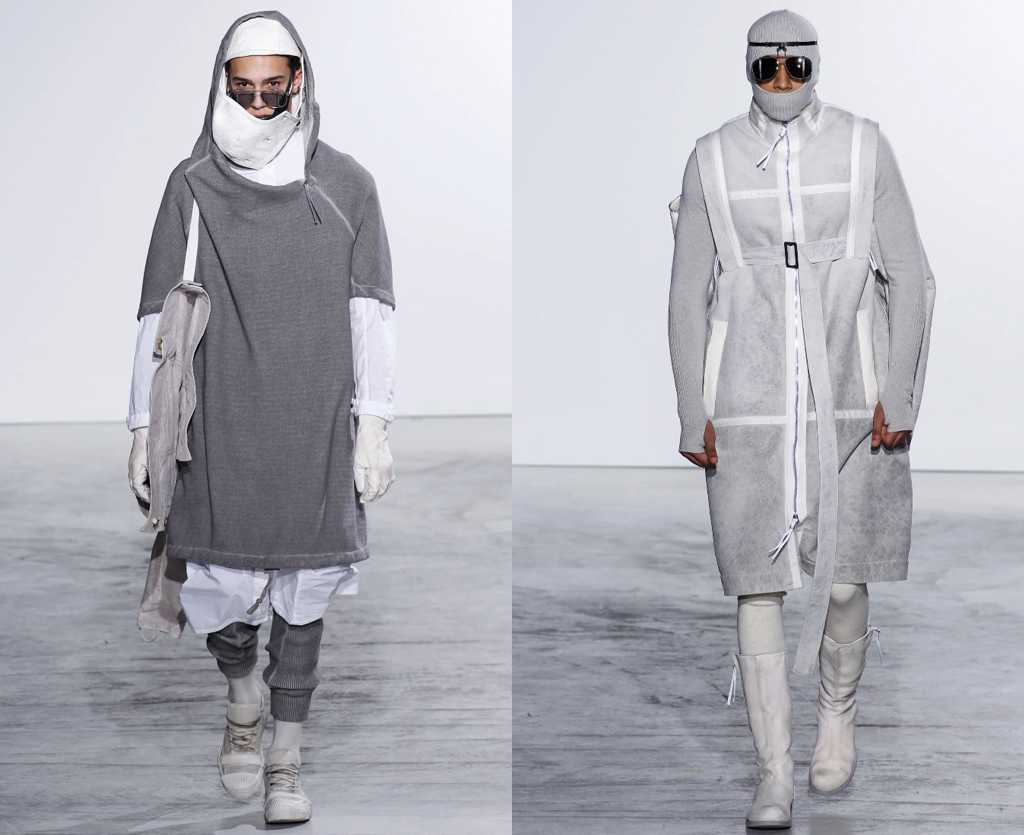 Boris Bidjan Saberi A/W 2016
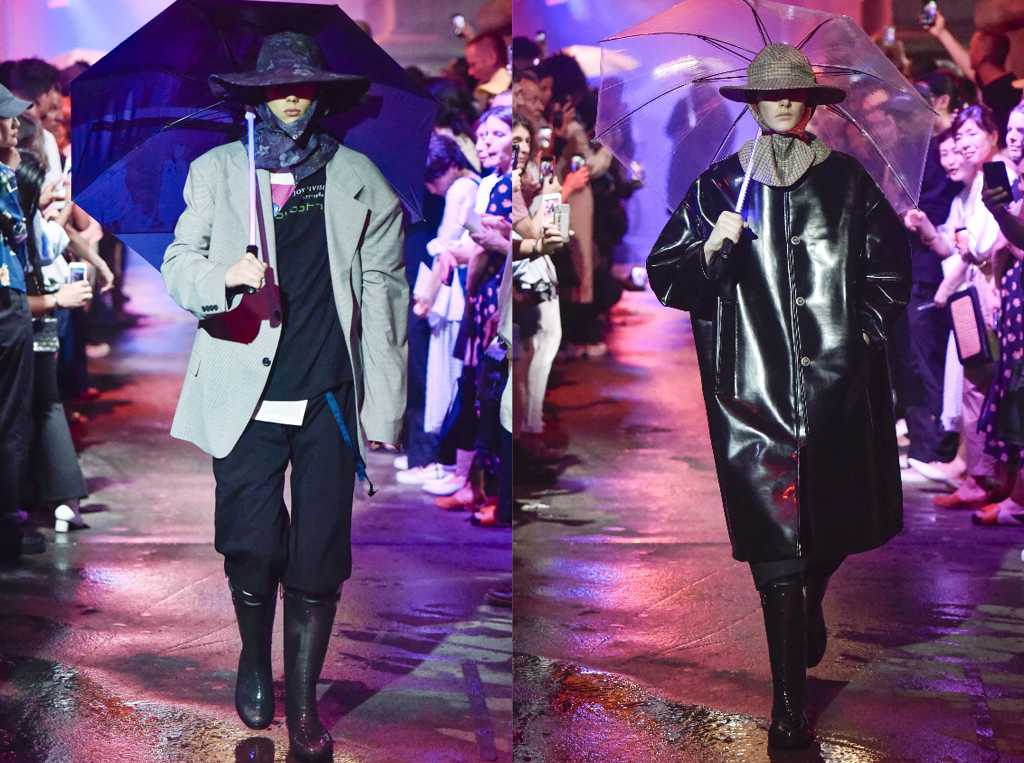 Raf Simons S/S 2018
4.2 Cyberpunk Aesthetic & Media References
Section titled “4.2 Cyberpunk Aesthetic & Media References”Source: Cyberpunk Fashion — SHELLZINE

 Ghost in the Shell (1995) — Major & Batou
 Mondo 2000 cyberpunk culture infographic
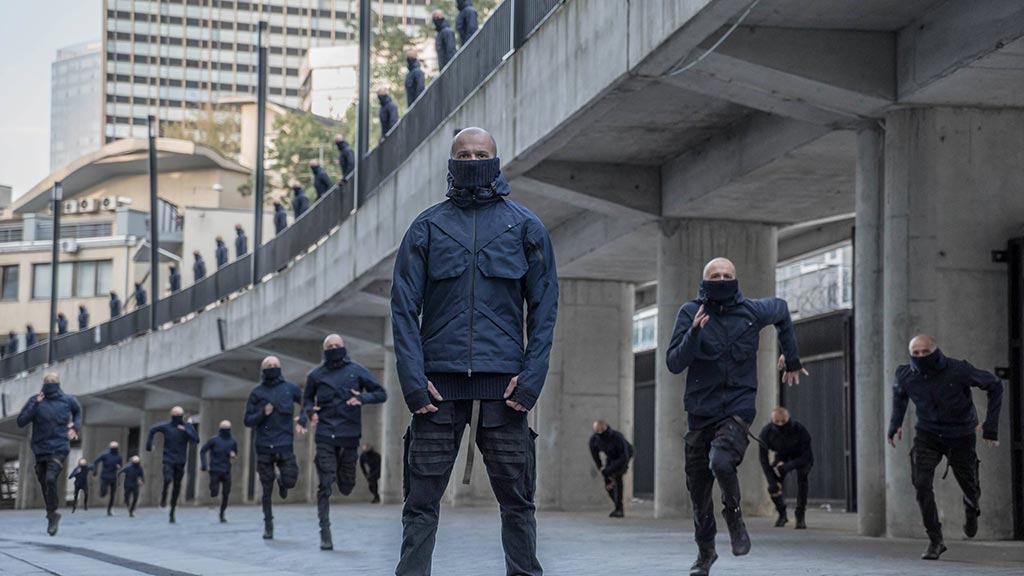 Riot Division FW17/18 techwear lookbook
4.3 Tokyo Cyber Street Style
Section titled “4.3 Tokyo Cyber Street Style”Source: Tokyo Fashion — cyber tag
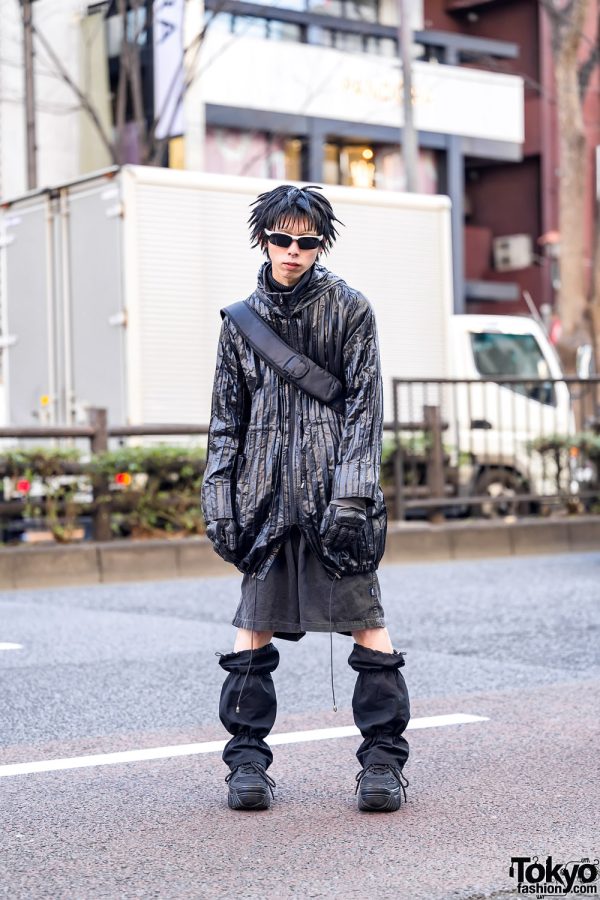 Japanese Cyber/Y2K street style, Harajuku 2023
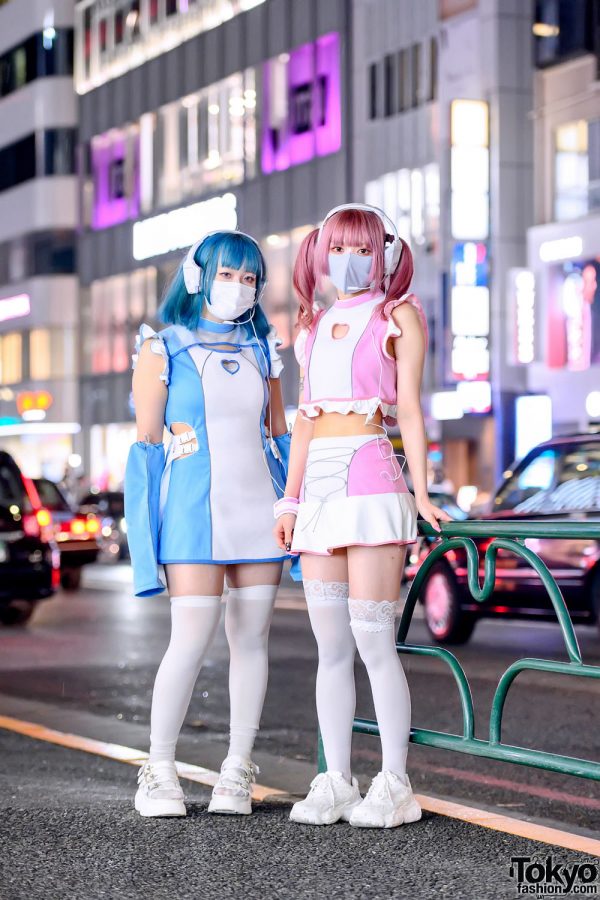 Cyber fashion, Harajuku 2021
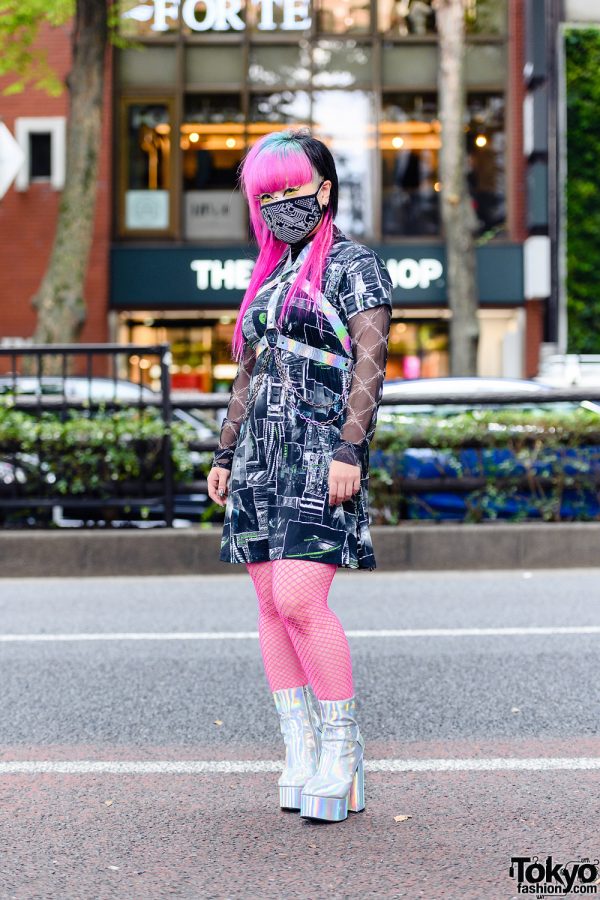 Cyber street style with iridescent platform boots, Harajuku 2020
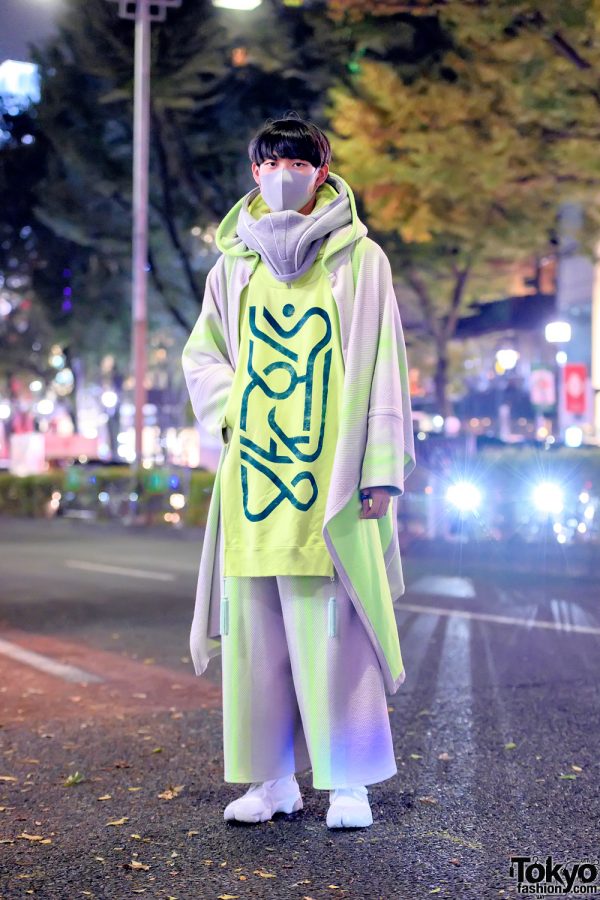 Hatra Japan neon street style, Harajuku 2019
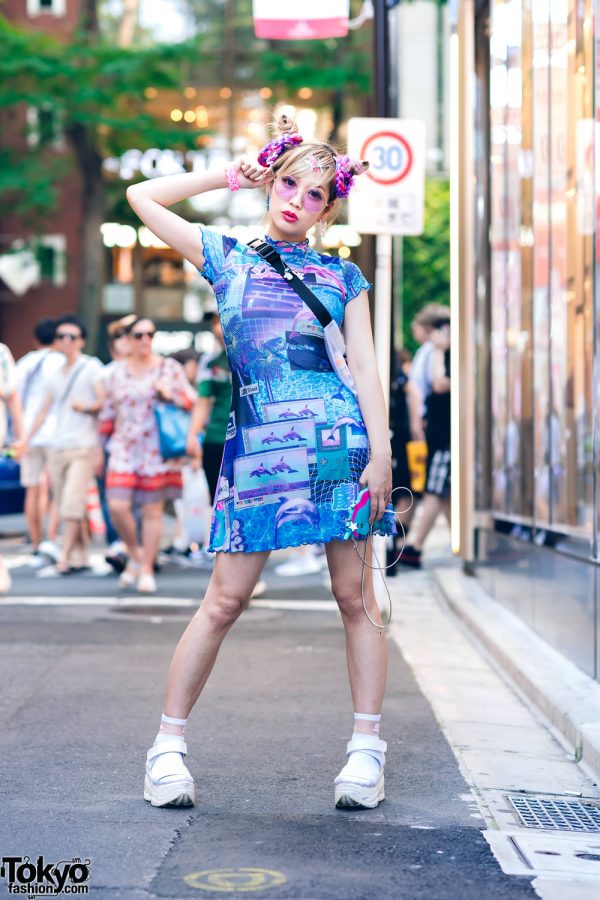 Harajuku vaporwave dress, 2019
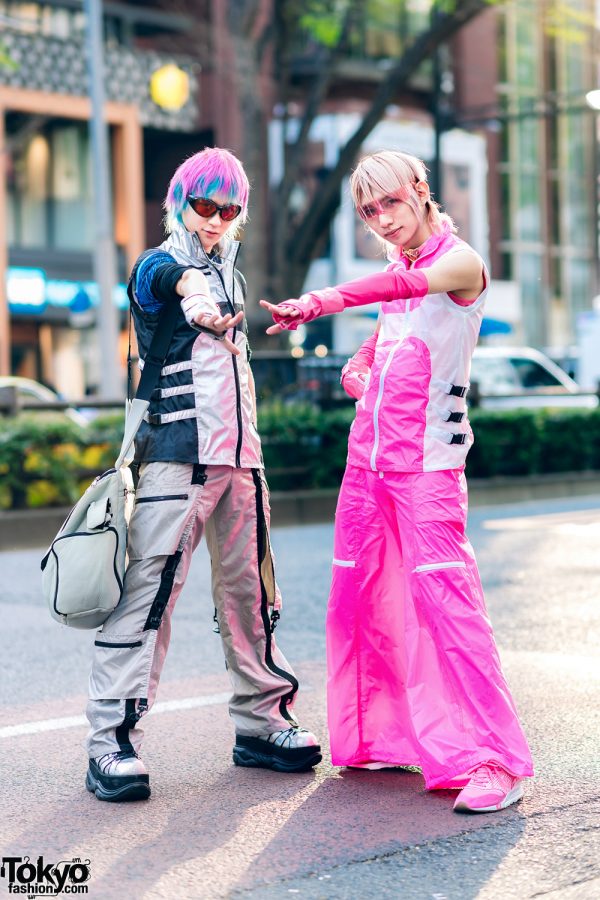 Aika Electronics cyber street fashion, Harajuku 2019
5. Key Findings
Section titled “5. Key Findings”5.1 Origins: The “High Tech, Low Life” Aesthetic
Section titled “5.1 Origins: The “High Tech, Low Life” Aesthetic”Cyberpunk fashion is rooted in 1980s science fiction. William Gibson’s Neuromancer (1984) coined the “high tech, low life” ethos — the contradiction of gleaming technology against social decay [S1]. Visually, Blade Runner (1982) established the noir-urban aesthetic: dark trench coats, neon reflections, and dystopian cityscapes [S1, S2]. Akira (manga 1982 / anime 1988) catalysed Japan’s distinct interpretation, merging futurism with anime and street subcultures [S3].
The term “cyberpunk” was coined in 1980 by Bruce Bethke as a short story title — predating its cultural appropriation as a genre label [S-NLM]. “Cybergoth” was coined in 1988 by tabletop game company Games Workshop for their game Dark Future, years before the fashion subculture emerged in the late 1990s [S4].
5.2 Subcultures: Four Major Expressions
Section titled “5.2 Subcultures: Four Major Expressions”Cybergoth (late 1990s–2000s peak) is the most theatrically extreme form. Originating in the fusion of industrial music and rave culture, it is characterised by a dark monochrome base spiked with neon or UV-reactive colour [S4]. Signature elements: synthetic dreadfalls (“cyberlox”), aviator goggles, gas masks, PVC or vinyl clothing, and massive platform boots. Philosophically it acts as “armour for the alienated,” designed to reclaim personal space and project a defiant, survivalist attitude [S4]. The “goth” label is contested — purists note its actual musical roots are in rave and industrial, not gothic rock.
Techwear (2010s–present) is grounded in the philosophy that “function defines form” [S5, S6]. Founded visually on Acronym (est. 1994) and its use of Gore-Tex, Ripstop, and articulated joints, the aesthetic features a strictly restrained palette (black, charcoal, olive, navy), modular MOLLE webbing, and weatherproof zippers. It recontextualises military and mountaineering technology for urban environments, rejecting fast fashion in favour of “buy less, buy better” [S5]. Sub-genres include Warcore (aggressive military excess), Darkwear (gothic draping without high-performance materials), and Gorpcore (outdoors/leisure crossover).
Neo-Cyberpunk (2020s) updates the classic aesthetic for the digital-native era, blending Vaporwave, Synthwave, and Glitch Art into highly saturated cyan/magenta/yellow palettes [S-NLM]. Where classic cyberpunk features hacker antiheroes overthrowing corporations, Neo-Cyberpunk is more disenchanted and claustrophobic, reflecting platform capitalism and gig-economy survival rather than grand rebellion.
Tokyo Cyber / Harajuku Cyberpunk (1990s–present) is a retro-futuristic style catalysed by Akira, mixing vinyl, LEDs, mechanical parts, and streetwear with anime references, traditional kimono cuts, Y2K metallics, and “kawaii” elements [S3, S7]. Characterised by “structured disorder,” gender-fluid inclusivity, and a view of technology as a tool for self-expression rather than a dystopian warning. Key brands: Takuya Angel, D/3, PRODUCT_C, Aika Electronics, Chloma, CTCTYO, Grounds.
5.3 High Fashion: The Runway Goes Cyberpunk
Section titled “5.3 High Fashion: The Runway Goes Cyberpunk”High fashion’s engagement with cyberpunk spans three decades of increasingly direct references:
| Designer | Collection | Cyberpunk Element |
|---|---|---|
| Thierry Mugler | A/W 1990, S/S 1991, F/W 1995 | H.R. Giger-inspired jacket; latex suits; chrome-and-plexiglass “Maschinenmensch” robotic bodysuits (Metropolis) |
| Jean Paul Gaultier | A/W 1995 “CYBER” | Computer chip embroidery; Mad Max-style dystopian elements |
| Helmut Lang | F/W 1999 | ”Astro Biker Jacket” in shiny silver — minimalist astronaut utility |
| Dior | A/W 1999 | Heavily referencing The Matrix, cementing the cyber-hacker look |
| Alexander McQueen | S/S 1999, S/S 2011 | Robotic car-painting arms spraying Shalom Harlow’s dress; H.R. Giger heels |
| Rick Owens | A/W 2014 “Moody”, F/W 2021 | Alien-armour leather tunics; apocalyptic masked silhouettes |
| Raf Simons | S/S 2003, S/S 2018 | Corporate-decay utilitarian; animated LED “REPLICANT” signs referencing Blade Runner |
| Balenciaga | F/W 2021 | VR video game Afterworld: The Age of Tomorrow — oversized streetwear with cyber-medieval armour |
| Comme des Garçons | S/S 2021 | Shiny silver metallic cybernetic-armour wraps |
| UNDERCOVER | F/W 2018 | AI malfunction and space suits |
| Gareth Pugh | A/W 2011 | Geometric leather dresses |
| Julius_7 / BLACKMERLE | Ongoing | Modular Akira-style body horror; dystopian lookbooks |
[S8, S-NLM]
5.4 Wearable Technology & Smart Fabrics
Section titled “5.4 Wearable Technology & Smart Fabrics”Wearable tech represents the literal realisation of the cyberpunk ethos — clothing as an intelligent, responsive second skin [S9, S10].
Key innovators:
-
Anouk Wipprecht (Netherlands) — “FashionTech” designer. Spider Dress: animatronic exoskeleton with proximity and respiration sensors that attacks intruders of personal space. Smoke Dress: emits camouflage smoke when approached. Sonica: body-as-instrument performance suit. Notes a “lack of collaboration between fashion houses and engineering departments” as the field’s central practical challenge [S9].
-
Iris van Herpen (Netherlands) — couturier combining fashion, science, and 3D printing. Voltage Collection: 3D-printed and laser-cut garments with sensitive antennae that vibrate in tune with the wearer’s body energy, generated using AI and generative design algorithms [S10].
-
CuteCircuit — Soundshirt: micro-actuators translate live music into haptic vibrations felt across the torso (designed for deaf audiences). Hugshirt: Bluetooth + pressure sensors recreate the sensation of a hug sent over distance. Twitter Dress: full-colour LED pixels displaying real-time tweets [S10].
-
Ying Gao (Canada/Montreal) — conceptual fashion installations using smart fabrics and eye-tracking. (No)where (Now)here: dress that turns off room lights and illuminates itself when a spectator looks directly at it. Incertitudes: voice-reactive dress animated by tone and intensity rather than words [S10].
Smart fabric technology (2025–2026): Active smart textiles can now use electrochromic dyes to change colour based on body heat or environmental factors [S11]. Passive smart textiles include conductive yarns, e-fibres, and embedded sensors. The frontier includes “textile brains” — AI edge-processing distributed directly into fabric to autonomously analyse health data and adapt to environment in real-time [S11]. Key challenge: washability — rigid electronics bonded to textiles typically fail under standard washing cycles [S12].
5.5 Current State: 2025–2026 Trends
Section titled “5.5 Current State: 2025–2026 Trends”Techwear Hybridisation — modular, weather-resistant techwear merged with glowing luminescent stitching, UV-taped straps, and neon accents [S-NLM].
“Y3K” and Cyber-Raver Fusion — in the US club scene, industrial goth fused with rave culture: matte black PVC and tactical gear paired with acid-neon colours, LED-embedded accessories, synthetic dreadfalls, and platform boots. Maximalist and high-energy [S-NLM].
East Asian Futuristic Goth/Punk — South Korea and Japan are leading with neo-punk precision: structured tailoring against sheer layers, heavy leather with metallics, tech-inspired accessories. Brands: Hyein Seo (edgy silhouettes), Goopimade (AR-integrated t-shirts), We11done. Seoul has emerged as a global leader in futuristic fashion [S-NLM].
“Y3K” retro-future hybrid (South Korea) — Y2K nostalgia (low-rise denim, crop tops) fused with holographic materials and digital textures.
Eco-Cyberpunk / Greenpunk — sustainability push using recycled plastics, organic cotton, biofabricated mycelium leather. NeoMachi is a standout brand: cyberpunk + Japanese folklore, PETA-vegan and climate-positive [S-NLM].
Dedicated cyberpunk retail — OFF-WRLD, Cyber Techwear selling accessible cyberpunk gear (tactical jackets, LED masks, mechanical prosthetics). Acronym remains the techwear benchmark.
Where it is headed — “textile brains” with autonomous AI; AR and metaverse integration (scannable AR illusions, wearable NFTs, haptic feedback); transition from dystopian to “solarpunk” — high-tech, self-healing, biodegradable garments [S11, S-NLM].
5.6 Visual & Media Resources
Section titled “5.6 Visual & Media Resources”YouTube: “This Is Antwon” (techwear styling, brand reviews, outfit breakdowns)
Instagram: @Zaiyen (8.1M+ likes, Japanese street style), @cyber_techwear, Hinae Katsura (maximalist Y3K, Tokyo), XEONIQ/Joseph Gleasure (SHELLZINE futuristic fashion)
Photography: Jimin Jeon (40-image gallery, Tokyo Fashion Week FW26 for Hypebeast), Luke Nugent (AI-powered futuristic fashion portraits), Mila Gruber / Satoshi-K / Tiffany Boubkeur (Tokyo street style for ELLE), Koji Hirano (Rakuten Fashion Week Tokyo, Getty)
Lookbooks & archives: Julius_7 2012 manga lookbook; BLACKMERLE official lookbooks; Tokyo Fashion Archive (Harajuku subcultures); KERA magazine (web version)
Online communities: r/techwearclothing (Reddit — primary techwear community)
6. Source Inventory
Section titled “6. Source Inventory”Select key sources with quality annotations. Full source list in NLM notebook (https://notebooklm.google.com/notebook/9c1b2a69-4407-4230-8be7-622e5481ac05).
| ID | Source | Type | Date | Quality | Notes |
|---|---|---|---|---|---|
| S1 | Cyberpunk Fashion — Printful Blog | Web | 2023 | Medium — commercial blog, credible fashion content, well-sourced | 10 core features of cyberpunk fashion; origins; high fashion references |
| S2 | Smart Fabrics 2026 — Printful Blog | Web | 2024 | Medium — commercial blog, current research, no primary data | Passive/active textiles, biometrics, colour-change, biofab leather, energy-harvesting |
| S3 | Tokyo Cyber Fashion — Savvy Tokyo | Web | 2023 | Medium — lifestyle publication, author-attributed, Japan-specific | 1990s Harajuku origins; Akira catalyst; brands Takuya Angel, D/3, PRODUCT_C |
| S4 | Cybergoth — Wikipedia | Web | Updated 2024 | Medium — wiki, broadly corroborated, no primary sources | Coined 1988 Games Workshop; late 90s–2000s peak; visual elements and music roots |
| S5 | Techwear — Aesthetics Wiki | Web | Updated 2024 | Medium — community wiki, well-detailed, no formal citations | Acronym 1994, Gore-Tex/Ripstop, subgenres Warcore/Gorpcore/Darkwear |
| S6 | A Brief Introduction to Techwear — Reddit | Web | 2023 | Medium — practitioner community, candid, no formal citations | Grassroots perspective; quality sourcing challenges; ThisIsAntwon reference |
| S7 | Tokyo Fashion — cyber tag | Web | 2019–2023 | Medium — photo archive, no editorial depth | Street snaps 2019–2023; brands Aika Electronics, Hatra, PRODUCT_C |
| S8 | A Brief History of Cyberpunk on the Fashion Runway — SHELLZINE | Web | 2023 | Medium — independent fashion zine, author-attributed | Runway history: Mugler, Gaultier, McQueen, Raf Simons, Rick Owens |
| S9 | Anouk Wipprecht FashionTech — Streaming Museum | Web | 2022 | High — primary source (designer interview), specific project details | Spider Dress, Smoke Dress, Sonica; engineering-fashion collaboration challenges |
| S10 | (PDF) Wearable Technologies: Between Fashion, Art, Performance, and Science (Fiction) — Tekstilec 2019 | Academic | 2019 | High — peer-reviewed journal, 14 citations, 21 references | Categorisation of wearable tech; van Herpen, CuteCircuit, Ying Gao |
| S11 | Smart and Sustainable: A Global Review of Smart Textiles, IoT Integration, and Human-Centric Design — MDPI Sensors 2025 | Academic | 2025 | High — peer-reviewed, systematic methodology, 150+ references | Most authoritative source on smart textile state of the art |
| S12 | Advancements in functional smart and wearable textiles for sportswear — RSC Advances 2025 | Academic | 2025 | High — peer-reviewed, 160+ references | Nano-textiles history, washability failures, smart fabric integration |
| S13 | 2026 Japanese Streetwear Trends — Zenmarket | Web | 2026 | Medium — commercial blog, Japan-specific, current | Y3K and retro-future hybrid trends; South Korean influence |
| S14 | 10 Tokyo Outfit Ideas — ELLE | Web | 2025 | Medium — reputable fashion magazine, photo-led | Tokyo street style; brands and styling references |
| S15 | Chloma.com | Web | 2025 | Medium — brand primary source, limited editorial | Modern Japanese cyber brand; visual style reference |
| S16 | Mon initiation au techwear — Bonne Gueule (EN) | Web | 2023 | Medium — respected French men’s fashion publication, in-depth | Techwear origins, philosophy, brand comparisons |
| S-NLM | NotebookLM Briefing Doc | NotebookLM output | 2026-04-03 | Medium — AI synthesis from 72+ sources, not independently primary | Cross-source synthesis; used as corroboration for all major themes |
7. Conflicts & Open Questions
Section titled “7. Conflicts & Open Questions”Conflict — Cyberpunk vs. Techwear functionality: Some sources clearly separate the two, arguing cyberpunk clothing is “totally unrelated to functionality and versatility” (pure aesthetic rebellion), while techwear strictly requires function to define form [S5, S6]. However, many other sources treat them as deeply intertwined, with modern cyberpunk borrowing extensively from techwear’s modular cargo systems and weatherproof fabrics [S1, S-NLM]. Neither side is clearly more authoritative — this may reflect a genuine evolution of the boundary rather than a factual dispute.
Conflict — Political authenticity vs. mainstream adoption: Classic cyberpunk fashion has anti-capitalist, anti-corporate roots. Critics argue that luxury brand adoption and mainstream streetwear integration have stripped these politics, turning the aesthetic into “a sellable neon dystopia” [S-NLM]. Supporters treat it as natural cultural evolution. The critique is single-sourced (critical cultural studies perspective) but internally consistent and unrefuted by other sources.
Conflict — Cybergoth’s musical identity: The “goth” label is contested within alternative subcultures. Purists argue cybergoth’s actual roots are in industrial/rave music, not gothic rock, making the label a technical misnomer [S4, S-NLM].
Unresolved — Techno-Orientalism: Multiple sources flag cyberpunk’s use of East Asian aesthetics (neon kanji, Tokyo megacity imagery) as an exotic backdrop while centring Western protagonists. This critique (“techno-Orientalism”) is present but no sources provide a systematic primary analysis — it is referenced in passing without deep examination.
Unresolved — E-waste from smart fashion: The environmental cost of discarding smart garments (complex composites of polymers and electronics) is acknowledged as a problem but no source quantifies it or provides a primary study [S12, S-NLM].
8. Blindspot / Gap Analysis
Section titled “8. Blindspot / Gap Analysis”-
Opposing view — Covered: commodification critique, techno-Orientalism, sexism in the genre, sustainability paradox, and privacy concerns are all represented in sources.
-
[~] Recency — Partial: 2025 street trends are well covered. Specific F/W 2025 and S/S 2026 runway collections are absent. Impact of spatial computing headsets (Apple Vision Pro, Meta Quest) as cyberpunk accessories in 2025–2026 is not documented. Generative AI’s role in fast-fashion cyberpunk design is missing.
-
[~] Practitioner vs. theoretical — Partial gap: sources are dominated by commercial marketing blogs, academic smart-textile papers, and high-fashion spectacle. Real-world perspectives largely absent: everyday wearability of PVC/heavy techwear; garment manufacturing realities (pattern-makers, conductive yarn tailoring); consumer experience of navigating low-quality drop-shipper techwear (flagged by Reddit community).
-
[~] Geographic / cultural variation — Partial gap: strong coverage of Japan, South Korea, US, Netherlands, France. The Global South is almost entirely absent — no coverage of African, Latin American, or Southeast Asian interpretations of cyberpunk fashion. Indigenous/traditional garment fusion (beyond Tokyo’s kimono-cyber blending) is missing.
-
[~] Adjacent domains — Gap: cybersecurity perspectives on smart garment vulnerabilities are absent. Urban anthropology (“anti-surveillance” fashion confusing facial recognition) is absent. HCI/psychology research on the emotional impact of haptic/shape-shifting garments is absent. E-waste management expertise is absent.
-
Negative results — Covered: 3D printing adhesion failures; rigid couture unwearability (Iris van Herpen Ice Dress); electronic textile washability failures; consumer-level printer impracticality (Danit Peleg: 2,000 hours for 5 outfits); stiff early sensor integration.
-
[~] Stakeholder perspectives — Gap: everyday wearers’ lived experience is almost absent (only passing Reddit mentions). Traditional garment workers’ perspectives on automation displacement are absent. Ethicists and cybersecurity experts on biometric data collection via clothing are absent. Cultural critics on techno-Orientalism are mentioned but not deeply represented.
9. Recommended Next Steps
Section titled “9. Recommended Next Steps”-
Deep-read the NLM Briefing Doc (Artifact A): The NLM-generated briefing doc synthesises across all 72+ sources and may surface details not captured in the 9 RAG queries run here.
-
Fill the runway recency gap: Fetch recent runway coverage from Vogue Runway (vogue.com/fashion-shows) for F/W 2025 and S/S 2026 to document which designers are currently engaging with cyberpunk aesthetics.
-
Follow the techno-Orientalism thread: Search academic databases (Google Scholar, JSTOR) for “techno-Orientalism fashion” — this is flagged multiple times but never deeply sourced in the current material.
-
Add a practitioner voice: Seek interviews or long-form articles featuring independent techwear/cyberpunk designers, tailors, or wearers (not brand marketing). The r/techwear and r/techwearclothing subreddits are a useful starting point.
-
Global South coverage: Run a targeted NLM research query on “cyberpunk fashion Africa Latin America Southeast Asia” or “futuristic streetwear Global South” to address the most significant geographic gap.
-
Wearable tech ethics research: Add a source from a cybersecurity or privacy-focused perspective on biometric garment data — consider EFF (eff.org) or academic papers on privacy in IoT wearables.
-
Generate NLM deliverables (on request): The notebook supports podcast (deep-dive), video explainer, slide deck, infographic, and quiz generation — available via
notebooklm generate <type>against notebook9c1b2a69-4407-4230-8be7-622e5481ac05.
Report generated: 2026-04-03 — see frontmatter for full metadata.